
Andis Clipper Blades: Systems, Fit and Replacement
Andis clippers use three blade systems - detachable (UltraEdge/CeramicEdge), T-blade, or adjustable taper - and they are not interchangeable. Tell them apart by how the blade comes off: thumb-release means detachable, a screwdriver means taper, and a wide squared blade means T-blade.
Andis builds clippers around several blade systems that look similar in photographs and do not interchange. Ordering the wrong one is the most common mistake here, and it is not always obvious at the point of sale - some blades will physically mount to a machine they were never meant for and simply cut badly. Work out which system your clipper uses first; everything else follows from that.
Compare the Full Lineup
Detachable, T-blade or adjustable taper
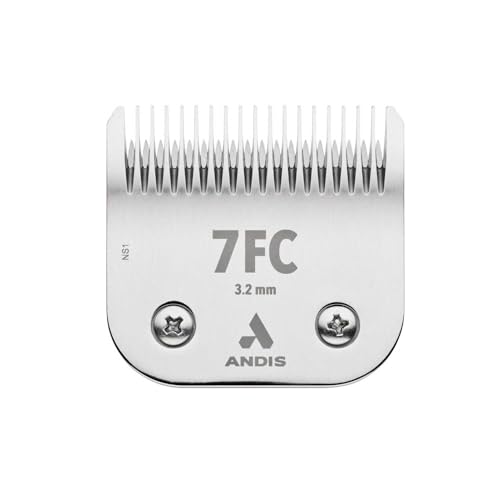
Detachable blades snap off and on by hand. Each blade is a fixed size and you change size by changing blade. This is the standard on grooming machines and on several professional clippers - the UltraEdge and CeramicEdge lines are the ones you will see most often.
T-blades are wider and squared off at the corners, which lets the clipper cut right up to a line. They fit trimmers built for them and are not a substitute for a standard blade on the same machine.
Adjustable taper blades are bolted on and move with a lever on the side of the clipper, changing cut length without swapping parts.
A quick test: if the blade comes off with thumb pressure and no tools, it is detachable. If changing it means a screwdriver, it is a taper blade.
A T-blade trimmer such as the T-Outliner has its own quirks when it stops cutting close - see why an Andis T-Outliner is not cutting for the alignment and zero-gap fixes.
Not sure which category your own clipper falls into? The Andis clipper compatibility guide maps AGC, ProClip, Pulse ZR, Select Cut and enVISION models to the system each one actually uses.
UltraEdge and CeramicEdge
Both are detachable and share the same mounting, so a machine that takes one takes the other. The difference is the cutter material.
UltraEdge is steel throughout - the workhorse, and the cheaper of the two to replace.
CeramicEdge uses a ceramic cutter against a steel still blade. Ceramic runs cooler over long sessions, which matters if you are cutting for hours, and it holds an edge longer. It is also more brittle: a dropped ceramic cutter is far more likely to chip than a steel one.
For occasional use at home, steel is the sensible choice. For a machine running most of the day, the cooler blade earns its price.
Weighing one line against the other? The Andis UltraEdge vs CeramicEdge comparison sets heat, edge life and cost side by side.
Popular options on Amazon
Prices change often - check the current price on Amazon.




Andis blade systems at a glance
The four systems below cover almost everything Andis sells. Match the machine to a row before ordering - the mounting style decides fit, not the size number.
| System | How it mounts | Sizing | Best for |
|---|---|---|---|
| UltraEdge (detachable, steel) | Snaps on and off by hand, no tools | Fixed size per blade; change size by swapping the blade | Everyday grooming and general clipping - the cheaper line to replace |
| CeramicEdge (detachable) | Same mounting as UltraEdge, so machines take either | Fixed size per blade, matched to the UltraEdge numbers | Long sessions where a cooler-running, longer-lasting edge earns its higher price |
| T-blade | Fits trimmers built for it; wider and squared at the corners | Cuts right up to a line for outlining | Outlining, edging and finishing - not a stand-in for a standard blade |
| Adjustable taper | Bolted on, moved by a lever on the side of the clipper | Cut length changes with the lever, no blade swap | Blending and varying length on one blade without changing parts |
Original or third-party
Third-party blades sold as Andis-compatible are common and considerably cheaper. Quality varies: some are ground properly and cut indistinguishably from the original, others sit fractionally off and show it as pulling on one side or a blade that heats faster than it should.
The risk is manageable on a home clipper and less so on a machine you rely on. Be wary of listings that claim compatibility with several brands at once - those are built to a common mounting pattern, which is not the same as being made for your clipper.
Before you decide the blade is finished
Most blades that get replaced were not worn out. Work through this first:
- Oil it - a few drops across the teeth with the clipper running. A dry blade pulls, heats and sounds harsh, and oiling fixes it in seconds
- Clean underneath - on a detachable blade, take it off and clear the packed hair between cutter and still blade
- Check alignment - the cutter should sit slightly back from the tips of the still blade and be square across
- Check tension - too loose and it chatters, too tight and it drags and overheats
If it still pulls after all four, the blade is genuinely done. Detachable blades can be professionally resharpened, which is worth doing for a ceramic or a good steel blade and rarely worth it for a cheap one.
If the machine hums but the blade hardly moves even with a fresh, oiled blade fitted, the problem is not the blade at all - it is usually the blade drive or hinge. Those are covered under Andis clipper replacement parts, both easy to swap at home.
Keeping a spare
Anyone cutting regularly benefits from a second blade in the size they use most. Blades run hot in continuous use, and swapping to a cool one is how professionals avoid burning the animal or client - and it doubles the interval between sharpenings, because heat is what takes the edge off.
Grooming dogs runs through blades faster still, and the size you need depends on the coat - the Andis dog clipper blades guide maps the common sizes to coat types.
If your machine is the small-animal SMC, every one of these detachable cuts fits it - the Andis SMC blade cut list sets out what each size leaves.
Frequently Asked Questions
Are Andis and Wahl blades interchangeable?
What is the difference between UltraEdge and CeramicEdge?
Can I put a T-blade on any Andis clipper?
How long should an Andis blade last?
Which Andis blade should I use?
What does UltraEdge mean on an Andis blade?
Can I use a third-party blade instead of a genuine Andis one?
Ready to check the latest price?
Check Blades on Amazon